
How to Cook Faster Without Rushing Your Prep
Shaving minutes off dinner comes down to pan mechanics, surface area, and working with heat instead of against it.
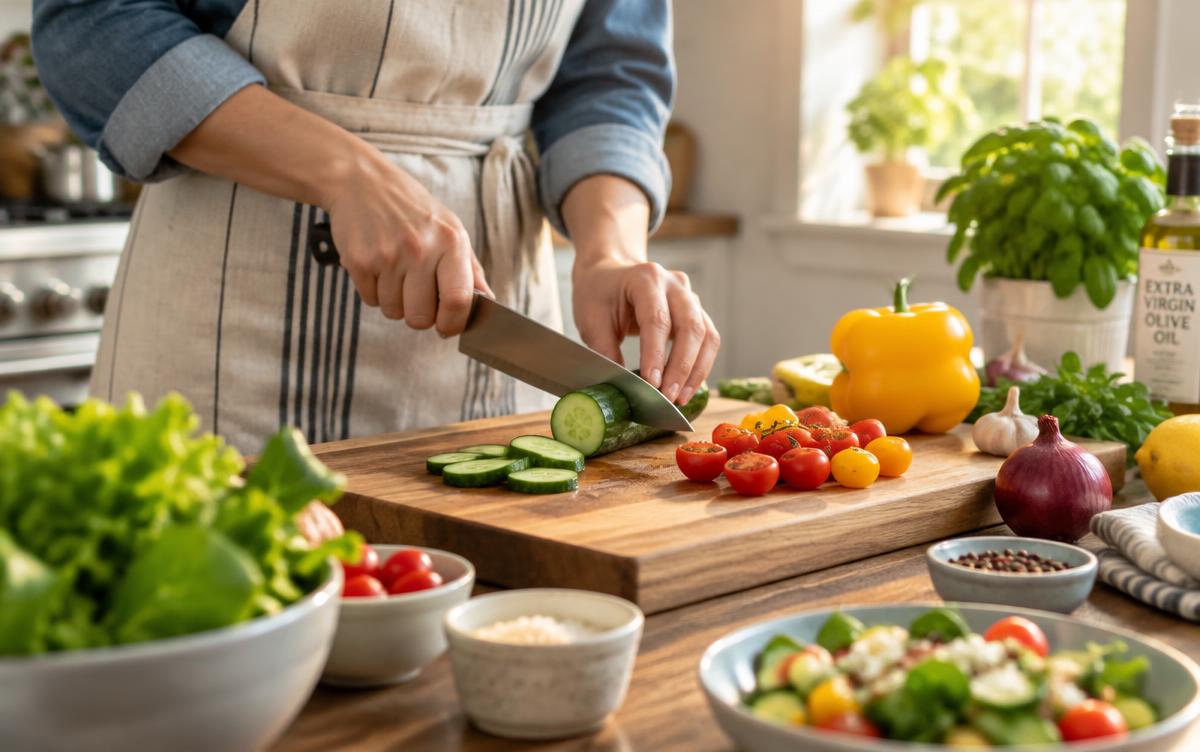
Most people think cooking faster requires moving like a television chef, chopping onions at lightning speed and darting between prep stations. In reality, speed in the kitchen has very little to do with hurried hands. Rushing prep work usually leads to uneven cuts, spills, and mistakes that take longer to fix than the seconds you tried to save. True efficiency happens on the stove. By adjusting how you use heat, manage pan space, and cut your ingredients, you can significantly reduce the time food takes to go from raw to ready.
Maximize surface area and stop crowding the pan
Moisture is the primary enemy of fast browning. When you drop cold, wet vegetables or meat into an overcrowded skillet, the temperature of the metal plummets. Instead of searing, the food releases water, traps steam, and gently boils in its own juices. Boiling takes twice as long to develop deep flavor as direct contact with hot fat.
To cut cooking time in half, use your largest skillet or split ingredients between two pans. Giving food room to breathe allows surface moisture to evaporate into the air immediately. That contact creates Maillard browning in three to four minutes rather than the ten or twelve minutes it takes to steam-fry a crowded pile. The wider the pan, the faster the water leaves, and the sooner dinner is finished.
Cut for heat transfer, not culinary school geometry
Uniform knife work is useful, but size dictates cook time far more than perfection. Dense root vegetables like carrots, sweet potatoes, and beets can take twenty-five minutes to soften if chopped into traditional half-inch cubes. If you cut those same vegetables into thin diagonal coins or matchsticks, they tenderize in six minutes flat.
The same rule applies to proteins. A whole chicken breast takes fifteen to twenty minutes of careful monitoring to cook through without drying out. Cut that same breast into thin cutlets across its width, or slice it into bite-sized strips, and it sears through in less than four minutes over medium-high heat. Smaller cross-sections mean heat reaches the center almost instantly.
Harness the two-stage steam and sear
One of the most reliable ways to cook dense foods quickly is to trap steam before trying to brown them. This method works especially well for broccoli, Brussels sprouts, green beans, and thick sausages.
Start the pan over high heat with a splash of oil and your vegetables. Add two tablespoons of water and immediately cover the skillet with a tight-fitting lid. The trapped steam forces high heat into the core of the vegetables, cooking them through in roughly ninety seconds. Remove the lid, let the residual water evaporate, and allow the hot fat to crisp the exterior for another minute or two. You get tender interiors and caramelized edges in under five minutes, skipping the long wait of a traditional roast.
Stagger additions by density rather than order of appearance
Many recipes instruct you to cook onions and garlic first, remove them, brown meat, remove that, and then soften vegetables. Every time you empty and reheat a pan, you reset your cooking timeline and create more dishes to wash.
Instead, order your pan by cooking resistance. Dense, watery items like mushrooms, sturdy greens stems, and cubed squash go in first over medium-high heat. Once they begin to take on color and soften, push them to the perimeter of the pan where the heat is slightly lower. Place your protein or quick-cooking aromatics directly into the center hot spot. By the time the center finishes searing, the edges have gently finished cooking through, and everything converges at the same finish line.
Use residual heat to coast across the finish line
Heavy cookware, particularly cast iron, stainless steel, and enameled Dutch ovens, holds an immense amount of thermal energy. Leaving the flame or burner on until an ingredient is fully cooked often leads to overcooking once the pan sits on the counter.
Turn off the heat when your dish is about eighty-five percent done. Delicate greens like spinach, thin fish fillets, and beaten eggs will finish gently on carryover heat alone without toughening. Soups and sauces will stay at a rolling simmer for several minutes after the burner is killed. Killing the heat early prevents scorched bottoms, eliminates the need for constant stirring, and gives you a clean head start on clearing the counter.
Cooking quickly is not about moving fast. It is about removing friction from the heat source and letting the physics of your pans do the heavy lifting for you.